

Chef Mark Olive is widely considered to be the godfather of Aboriginal cuisine in Australia. The affable Bundjalung man from Wollongong, just outside Sydney, has been a culinary fixture Down Under for close to 30 years. In addition to running his restaurants, “Black Olive” (as he is nicknamed) has hosted various food-related TV programmes while promoting and introducing the food of indigenous peoples.
Visiting Hong Kong for the first time recently, Olive helped launch Festival of Australia, a month-long showcase of Aussie ingredients and produce organised by its chamber, trade commission and consulate.
Although the First Nations chef is something of a celebrity at home and abroad, his array of indigenous ingredients, herbs and spices remains mostly unknown outside the country.
“At the moment, it’s still very Australian-centric,” Olive explains. “You do have places overseas now starting to pick up on our indigenous herbs, especially things like the lemon myrtle and wattleseeds. But the variety in our whole selection of herbs is huge.
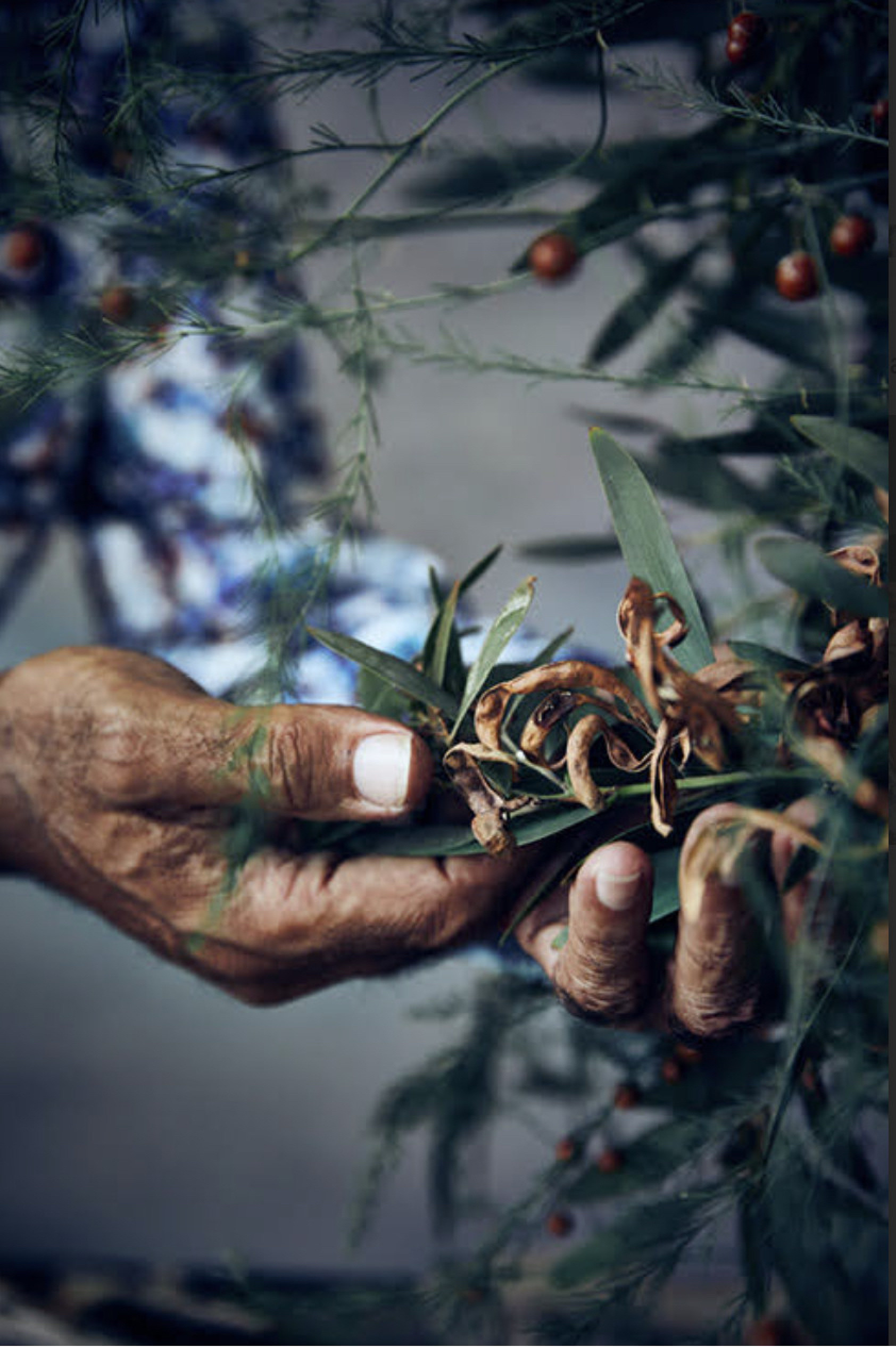
Olive explains that a lot of Aboriginal history was lost over the years and that while there were some libraries that held some useful information, he spent much of his time going out into the community, or “into the bush country” as he calls it, to do research.
“There’s a good 10 years of research, into all of these sources, before it all came together, and [Aboriginal cuisine] really became popular when I opened my first restaurant.”
Trained in European cuisine under an Italian chef, Olive began applying classic techniques to distinctly native Australian produce in the 1990s. As word spread about his pioneering endeavour, Olive became a near household name when television producers approached him to showcase his passion on local programmes.
“We’re the only country that eats the animals on our coat of arms [a kangaroo and an emu]. Why not? They’re tasty. It’s just too bad a lot of people won’t eat them,” Olive notes.
“Our proteins are amazing. Kangaroo and emu are extremely lean, so it’s very good protein. There’s hardly any fat and they’re extremely high in iron.
“I cook wallaby like osso buco [an Italian veal dish]. It’s spectacular. The wallaby is like the veal of kangaroos. Even possum is lovely.”
He says he interprets his indigenous cuisines’ herbs, spices and fruits through classic cooking.
“I would do a kangaroo mignon, wrapping the meat with a smoked emu instead of bacon, and sit it on a native spinach that is toxic unless you process and cook it.
“All the flavours would be totally different. I also do a lasagne with crocodile meat. People thought it was chicken. They look like Western dishes, but all the flavours are different and Aboriginal.”
The Festival of Australia in Hong Kong, which takes place throughout October, encompasses a dozen restaurants using fine Australian ingredients and numerous retailers showcasing produce from Queensland and other Australian states on their shelves.
Among the highlights is Australian native Shane Osborn of Arcane cooking with aromatic Aboriginal herbs in his dishes.
“Shane is amazing,” Olive says. “I think the way Australia is now, it’s starting to really realise that we have a viable culture. First Nations people have something unique to offer the world. I’ve seen the change in attitude. It’s become more mainstream since [indigenous foods and herbs were used on] MasterChef Australia. It has had an impact around the world.
“Right now, we send more kangaroo and crocodile meat overseas than we use in our own country. It was only in 1993 that they decriminalised the use of kangaroo [for human consumption]. You couldn’t buy it in supermarkets before. It wasn’t farmed.
“Nobody was doing what I was doing before. But a lot of communities are very proud of what I’ve done. I feel I have become a role model for Aboriginal Australia.”
Olive credits Sydney winning the bid to host the 2000 Olympic Games for kick-starting interest in Australia’s own culture, especially indigenous customs and history. As the nation’s pre-eminent chef of First Nations descent, he has, of course, benefited from the recognition.
Olive’s national icon status was reinforced when the Sydney Opera House gave him the opportunity to open a casual eatery on a space along its Western boardwalk and foyer. Midden by Mark Olive opened in July with a produce-focused menu drawing primarily on native Australian ingredients.
It’s only logical for him to be there, since the land on which the Opera House sits was previously a sacred Aboriginal landmark where people congregated to meet and dine together.
“Every man and his dog goes through that building when they come to Sydney,” Olive says. “To be there in a bright lunchtime in that Circular Quay, with the Sydney Harbour Bridge behind, it’s truly unique.
“We only launched on July 4th, but it took 12 months to get the whole concept right. So I’m very excited to be in such an iconic building, to showcase the food from Australia to the world. It’s such a unique experience to be right there where everybody around the world can see.
“As part of my 40-year career at the forefront of Aboriginal cuisine, it’s finally reached a goal where everybody is accepting it and starting to be proud of what we’ve got.”
Link: https://www.scmp.com/lifestyle/food-drink/article/3236982/aboriginal-chef-mark-olive-wants-more-people-around-world-understand-indigenous-australian-cuisine
“I was the first Aboriginal person to come out with a cooking degree in the early ’80s. It was way before all of these herbs were even available, so I had to do a lot of research.”